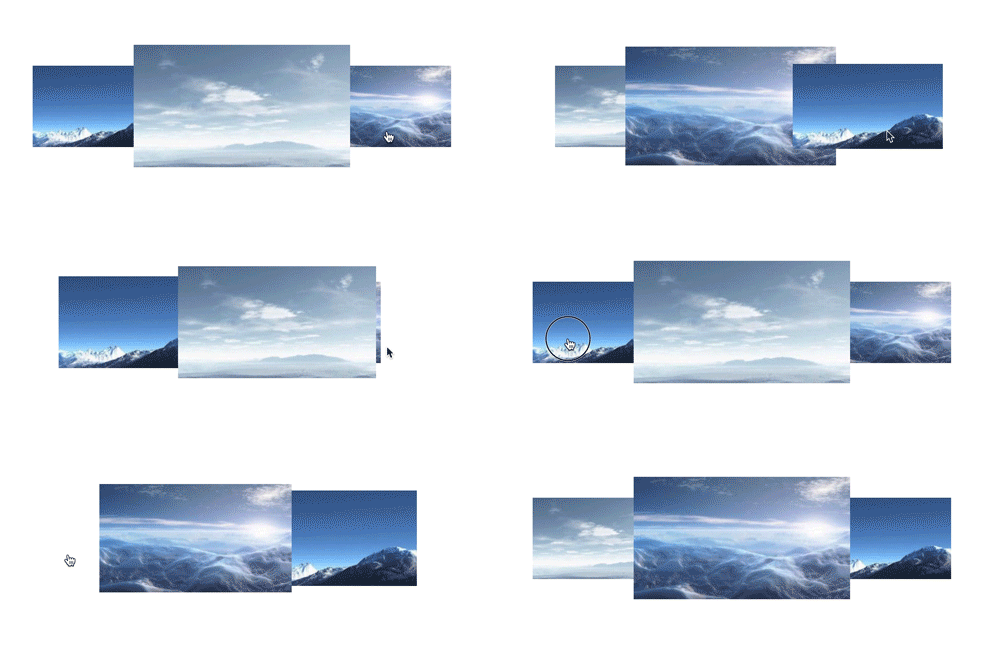


效果演示

不仅仅是实现效果,要封装,就封装好
看完了演示的效果,你是否在思考,代码应该怎么实现?先不着急写代码,先想想哪些地方是要可以动态配置的。首先第一个,进度条的形状是不是要可以换?然后进度条的背景色和填充的颜色,以及动画的时长是不是也要可以配置?没错,起始位置是不是也要可以换?最好还要让速度可以一会快一会慢对吧,画笔的笔帽是不是还可以选择平的或圆的?带着这些问题,我们再开始写代码。
代码实现
我们写一个自定义View,把可以动态配置的地方想好后,就可以定义自定义属性了。
<?xml version="1.0" encoding="utf-8"?>

<resources>

    <declare-styleable name="DoraProgressView">

        <attr name="dview_progressType">

            <enum name="line" value="0"/>

            <enum name="semicircle" value="1"/>

            <enum name="semicircleReverse" value="2"/>

            <enum name="circle" value="3"/>

            <enum name="circleReverse" value="4"/>

        </attr>

        <attr name="dview_progressOrigin">

            <enum name="left" value="0"/>

            <enum name="top" value="1"/>

            <enum name="right" value="2"/>

            <enum name="bottom" value="3"/>

        </attr>

        <attr format="dimension|reference" name="dview_progressWidth"/>

        <attr format="color|reference" name="dview_progressBgColor"/>

        <attr format="color|reference" name="dview_progressHoverColor"/>

        <attr format="integer" name="dview_animationTime"/>

        <attr name="dview_paintCap">

            <enum name="flat" value="0"/>

            <enum name="round" value="1"/>

        </attr>

    </declare-styleable>

</resources>
然后我们不管三七二十一,先把自定义属性解析出来。
private fun initAttrs(context: Context, attrs: AttributeSet?, defStyleAttr: Int) {

    val a = context.obtainStyledAttributes(

        attrs,

        R.styleable.DoraProgressView,

        defStyleAttr,

        0

    )

    when (a.getInt(R.styleable.DoraProgressView_dview_progressType, PROGRESS_TYPE_LINE)) {

        0 -> progressType = PROGRESS_TYPE_LINE

        1 -> progressType = PROGRESS_TYPE_SEMICIRCLE

        2 -> progressType = PROGRESS_TYPE_SEMICIRCLE_REVERSE

        3 -> progressType = PROGRESS_TYPE_CIRCLE

        4 -> progressType = PROGRESS_TYPE_CIRCLE_REVERSE

    }

    when (a.getInt(R.styleable.DoraProgressView_dview_progressOrigin, PROGRESS_ORIGIN_LEFT)) {

        0 -> progressOrigin = PROGRESS_ORIGIN_LEFT

        1 -> progressOrigin = PROGRESS_ORIGIN_TOP

        2 -> progressOrigin = PROGRESS_ORIGIN_RIGHT

        3 -> progressOrigin = PROGRESS_ORIGIN_BOTTOM

    }

    when(a.getInt(R.styleable.DoraProgressView_dview_paintCap, 0)) {

        0 -> paintCap = Paint.Cap.SQUARE

        1 -> paintCap = Paint.Cap.ROUND

    }

    progressWidth = a.getDimension(R.styleable.DoraProgressView_dview_progressWidth, 30f)

    progressBgColor =

        a.getColor(R.styleable.DoraProgressView_dview_progressBgColor, Color.GRAY)

    progressHoverColor =

        a.getColor(R.styleable.DoraProgressView_dview_progressHoverColor, Color.BLUE)

    animationTime = a.getInt(R.styleable.DoraProgressView_dview_animationTime, 1000)

    a.recycle()

}
解析完自定义属性,切勿忘了释放TypedArray。接下来我们考虑下一步,测量。半圆是不是不要那么大的画板对吧,我们在测量的时候就要充分考虑进去。
override fun onMeasure(widthMeasureSpec: Int, heightMeasureSpec: Int) {

    super.onMeasure(widthMeasureSpec, heightMeasureSpec)

    progressBgPaint.strokeWidth = progressWidth

    progressHoverPaint.strokeWidth = progressWidth

    if (progressType == PROGRESS_TYPE_LINE) {

        // 线

        var left = 0f

        var top = 0f

        var right = measuredWidth.toFloat()

        var bottom = measuredHeight.toFloat()

        val isHorizontal = when(progressOrigin) {

            PROGRESS_ORIGIN_LEFT, PROGRESS_ORIGIN_RIGHT -> true

            else -> false

        }

        if (isHorizontal) {

            top = (measuredHeight - progressWidth) / 2

            bottom = (measuredHeight + progressWidth) / 2

            progressBgRect[left + progressWidth / 2, top, right - progressWidth / 2] = bottom

        } else {

            left = (measuredWidth - progressWidth) / 2

            right = (measuredWidth + progressWidth) / 2

            progressBgRect[left, top + progressWidth / 2, right] = bottom - progressWidth / 2

        }

    } else if (progressType == PROGRESS_TYPE_CIRCLE || progressType == PROGRESS_TYPE_CIRCLE_REVERSE) {

        // 圆

        var left = 0f

        val top = 0f

        var right = measuredWidth

        var bottom = measuredHeight

        progressBgRect[left + progressWidth / 2, top + progressWidth / 2, right - progressWidth / 2] =

            bottom - progressWidth / 2

    } else {

        // 半圆

        val isHorizontal = when(progressOrigin) {

            PROGRESS_ORIGIN_LEFT, PROGRESS_ORIGIN_RIGHT -> true

            else -> false

        }

        val min = measuredWidth.coerceAtMost(measuredHeight)

        var left = 0f

        var top = 0f

        var right = 0f

        var bottom = 0f

        if (isHorizontal) {

            if (measuredWidth >= min) {

                left = ((measuredWidth - min) / 2).toFloat()

                right = left + min

            }

            if (measuredHeight >= min) {

                bottom = top + min

            }

            progressBgRect[left + progressWidth / 2, top + progressWidth / 2, right - progressWidth / 2] =

                bottom - progressWidth / 2

            setMeasuredDimension(

                MeasureSpec.makeMeasureSpec(

                    (right - left).toInt(),

                    MeasureSpec.EXACTLY

                ),

                MeasureSpec.makeMeasureSpec(

                    (bottom - top + progressWidth).toInt() / 2,

                    MeasureSpec.EXACTLY

                )

            )

        } else {

            if (measuredWidth >= min) {

                right = left + min

            }

            if (measuredHeight >= min) {

                top = ((measuredHeight - min) / 2).toFloat()

                bottom = top + min

            }

            progressBgRect[left + progressWidth / 2, top + progressWidth / 2, right - progressWidth / 2] =

                bottom - progressWidth / 2

            setMeasuredDimension(

                MeasureSpec.makeMeasureSpec(

                    (right - left + progressWidth).toInt() / 2,

                    MeasureSpec.EXACTLY

                ),

                MeasureSpec.makeMeasureSpec(

                    (bottom - top).toInt(),

                    MeasureSpec.EXACTLY

                )

            )

        }

    }

}
View的onMeasure()方法是不是默认调用了一个
super.onMeasure(widthMeasureSpec, heightMeasureSpec)
它最终会调用setMeasuredDimension()方法来确定最终测量的结果吧。如果我们对默认的测量不满意,我们可以自己改,最后也调用setMeasuredDimension()方法把测量结果确认。半圆,如果是水平的情况下,我们的宽度就只要一半,相反如果是垂直的半圆,我们高度就只要一半。最后我们画还是照常画,只不过在最后把画到外面的部分移动到画板上显示出来。接下来就是我们最重要的绘图环节了。
override fun onDraw(canvas: Canvas) {

    if (progressType == PROGRESS_TYPE_LINE) {

        val isHorizontal = when(progressOrigin) {

            PROGRESS_ORIGIN_LEFT, PROGRESS_ORIGIN_RIGHT -> true

            else -> false

        }

        if (isHorizontal) {

            canvas.drawLine(

                progressBgRect.left,

                measuredHeight / 2f,

                progressBgRect.right,

                measuredHeight / 2f,

                progressBgPaint)

        } else {

            canvas.drawLine(measuredWidth / 2f,

                progressBgRect.top,

                                    measuredWidth / 2f,

                progressBgRect.bottom, progressBgPaint)

        }

        if (percentRate > 0) {

            when (progressOrigin) {

                PROGRESS_ORIGIN_LEFT -> {

                    canvas.drawLine(

                        progressBgRect.left,

                        measuredHeight / 2f,

                        (progressBgRect.right) * percentRate,

                        measuredHeight / 2f,

                        progressHoverPaint

                    )

                }

                PROGRESS_ORIGIN_TOP -> {

                    canvas.drawLine(measuredWidth / 2f,

                        progressBgRect.top,

                        measuredWidth / 2f,

                        (progressBgRect.bottom) * percentRate,

                        progressHoverPaint)

                }

                PROGRESS_ORIGIN_RIGHT -> {

                    canvas.drawLine(

                        progressWidth / 2 + (progressBgRect.right) * (1 - percentRate),

                        measuredHeight / 2f,

                        progressBgRect.right,

                        measuredHeight / 2f,

                        progressHoverPaint

                    )

                }

                PROGRESS_ORIGIN_BOTTOM -> {

                    canvas.drawLine(measuredWidth / 2f,

                        progressWidth / 2 + (progressBgRect.bottom) * (1 - percentRate),

                    measuredWidth / 2f,

                        progressBgRect.bottom,

                    progressHoverPaint)

                }

            }

        }

    } else if (progressType == PROGRESS_TYPE_SEMICIRCLE) {

        if (progressOrigin == PROGRESS_ORIGIN_LEFT) {

            // PI ~ 2PI

            canvas.drawArc(progressBgRect, 180f, 180f, false, progressBgPaint)

            canvas.drawArc(

                progressBgRect,

                180f,

                angle.toFloat(),

                false,

                progressHoverPaint

            )

        } else if (progressOrigin == PROGRESS_ORIGIN_TOP) {

            canvas.translate(-progressBgRect.width() / 2, 0f)

            // 3/2PI ~ 2PI, 0 ~ PI/2

            canvas.drawArc(progressBgRect, 270f, 180f, false, progressBgPaint)

            canvas.drawArc(

                progressBgRect,

                270f,

                angle.toFloat(),

                false,

                progressHoverPaint

            )

        } else if (progressOrigin == PROGRESS_ORIGIN_RIGHT) {

            canvas.translate(0f, -progressBgRect.height() / 2)

            // 2PI ~ PI

            canvas.drawArc(progressBgRect, 0f, 180f, false, progressBgPaint)

            canvas.drawArc(

                progressBgRect,

                0f,

                angle.toFloat(),

                false,

                progressHoverPaint

            )

        } else if (progressOrigin == PROGRESS_ORIGIN_BOTTOM) {

            // PI/2 ~ 3/2PI

            canvas.drawArc(progressBgRect, 90f, 180f, false, progressBgPaint)

            canvas.drawArc(

                progressBgRect,

                90f,

                angle.toFloat(),

                false,

                progressHoverPaint

            )

        }

    } else if (progressType == PROGRESS_TYPE_SEMICIRCLE_REVERSE) {

        if (progressOrigin == PROGRESS_ORIGIN_LEFT) {

            canvas.translate(0f, -progressBgRect.height() / 2)

            // PI ~ 2PI

            canvas.drawArc(progressBgRect, 180f, -180f, false, progressBgPaint)

            canvas.drawArc(

                progressBgRect,

                180f,

                -angle.toFloat(),

                false,

                progressHoverPaint

            )

        } else if (progressOrigin == PROGRESS_ORIGIN_TOP) {

            // 3/2PI ~ PI/2

            canvas.drawArc(progressBgRect, 270f, -180f, false, progressBgPaint)

            canvas.drawArc(

                progressBgRect,

                270f,

                -angle.toFloat(),

                false,

                progressHoverPaint

            )

        } else if (progressOrigin == PROGRESS_ORIGIN_RIGHT) {

            // 2PI ~ PI

            canvas.drawArc(progressBgRect, 0f, -180f, false, progressBgPaint)

            canvas.drawArc(

                progressBgRect,

                0f,

                -angle.toFloat(),

                false,

                progressHoverPaint

            )

        } else if (progressOrigin == PROGRESS_ORIGIN_BOTTOM) {

            canvas.translate(-progressBgRect.width() / 2, 0f)

            // PI/2 ~ 2PI, 2PI ~ 3/2PI

            canvas.drawArc(progressBgRect, 90f, -180f, false, progressBgPaint)

            canvas.drawArc(

                progressBgRect,

                90f,

                -angle.toFloat(),

                false,

                progressHoverPaint

            )

        }

    } else if (progressType == PROGRESS_TYPE_CIRCLE) {

        val deltaAngle = if (progressOrigin == PROGRESS_ORIGIN_TOP) {

            90f

        } else if (progressOrigin == PROGRESS_ORIGIN_RIGHT) {

            180f

        } else if (progressOrigin == PROGRESS_ORIGIN_BOTTOM) {

            270f

        } else {

            0f

        }

        canvas.drawArc(progressBgRect, 0f, 360f, false, progressBgPaint)

        canvas.drawArc(

            progressBgRect,

            180f + deltaAngle,

            angle.toFloat(),

            false,

            progressHoverPaint

        )

    } else if (progressType == PROGRESS_TYPE_CIRCLE_REVERSE) {

        val deltaAngle = if (progressOrigin == PROGRESS_ORIGIN_TOP) {

            90f

        } else if (progressOrigin == PROGRESS_ORIGIN_RIGHT) {

            180f

        } else if (progressOrigin == PROGRESS_ORIGIN_BOTTOM) {

            270f

        } else {

            0f

        }

        canvas.drawArc(progressBgRect, 0f, 360f, false, progressBgPaint)

        canvas.drawArc(

            progressBgRect,

            180f + deltaAngle,

            -angle.toFloat(),

            false,

            progressHoverPaint

        )

    }

}
绘图除了需要Android的基础绘图知识外,还需要一定的数学计算的功底,比如基本的几何图形的点的计算你要清楚。怎么让绘制的角度变化起来呢?这个问题问的好。这个就牵扯出我们动画的一个关键类,TypeEvaluator,这个接口可以让我们只需要指定边界值,就可以根据动画执行的时长,来动态计算出当前的渐变值。
private inner class AnimationEvaluator : TypeEvaluator<Float> {

    override fun evaluate(fraction: Float, startValue: Float, endValue: Float): Float {

        return if (endValue > startValue) {

            startValue + fraction * (endValue - startValue)

        } else {

            startValue - fraction * (startValue - endValue)

        }

    }

}
百分比渐变的固定写法,是不是应该记个笔记,方便以后CP?那么现在我们条件都成熟了,只需要将初始角度的百分比改变一下,我们写一个改变角度百分比的方法。
fun setPercentRate(rate: Float) {

    if (animator == null) {

        animator = ValueAnimator.ofObject(

            AnimationEvaluator(),

            percentRate,

            rate

        )

    }

    animator?.addUpdateListener { animation: ValueAnimator ->

        val value = animation.animatedValue as Float

        angle =

            if (progressType == PROGRESS_TYPE_CIRCLE || progressType == PROGRESS_TYPE_CIRCLE_REVERSE) {

                (value * 360).toInt()

            } else if (progressType == PROGRESS_TYPE_SEMICIRCLE || progressType == PROGRESS_TYPE_SEMICIRCLE_REVERSE) {

                (value * 180).toInt()

            } else {

                0   // 线不需要求角度

            }

        percentRate = value

        invalidate()

    }

    animator?.interpolator = LinearInterpolator()

    animator?.setDuration(animationTime.toLong())?.start()

    animator?.addListener(object : Animator.AnimatorListener {

        override fun onAnimationStart(animation: Animator) {}

        override fun onAnimationEnd(animation: Animator) {

            percentRate = rate

            listener?.onComplete()

        }


        override fun onAnimationCancel(animation: Animator) {}

        override fun onAnimationRepeat(animation: Animator) {}

    })

}
这里牵扯到了Animator。有start就一定不要忘了异常中断的情况,我们可以写一个reset的方法来中断动画执行,恢复到初始状态。
fun reset() {

    percentRate = 0f

    animator?.cancel()

}
如果你不reset,想连续执行动画,则两次调用的时间间隔一定要大于动画时长,否则就应该先取消动画。
涉及到的Android绘图知识点
我们归纳一下完成这个自定义View需要具备的知识点。
- 基本图形的绘制,这里主要是扇形
- 测量和画板的平移变换
- 自定义属性的定义和解析
- Animator和动画估值器TypeEvaluator的使用
思路和灵感来自于系统化的基础知识
这个控件其实并不难,主要就是动态配置一些参数,然后在计算上稍微复杂一些,需要一些数学的功底。那么你为什么没有思路呢?你没有思路最可能的原因主要有以下几个可能。
- 自定义View的基础绘图API不熟悉
- 动画估值器使用不熟悉
- 对自定义View的基本流程不熟悉
- 看的自定义View的源码不够多
- 自定义View基础知识没有系统学习,导致是一些零零碎碎的知识片段
- 数学功底不扎实
我觉得往往不是你不会,这些基础知识点你可能都看到过很多次,但是一到自己写就没有思路了。思路和灵感来自于大量源码的阅读和大量的实践。大前提就是你得先把自定义View的这些知识点系统学习一下,先保证都见过,然后才是将它们融会贯通,用的时候信手拈来。